Pages

Monday, 13 January 2014

Sony Xperia Z2 tipped for February launch with 5.2-inch display

Sony will announce the next-generation Xperia Z2 at Mobile World Congress in February, according toAndroidSaS. It's not clear how reliable of a source the publication is for Sony news, but it was given a retweet by EvLeaks on Twitter, who is an often correct when it comes to the latest in mobile.
AndroidSaS reports the Xperia Z2 will feature a 5.2-inch 2560x1440 pixel display, 20.7-megapixel camera, and a 3700mAh battery. The design of the Xperia Z2 is said to be water resistant and super slim, bringing a refresh to the already sleek Xperia Z1.
The screen is the obvious standout here, reaching a 2K resolution. Right now, it sounds like the Xperia Z2 will have the best screen on the market, unless Samsung pulls out the punches with its Galaxy S5 smartphone set to launch in April.
Tipster EvLeaks said earlier this month the Sony Xperia Z1, codename Sirius, will sport a 5.2-inch display and Qualcomm Snapdragon 800 processor (MSM8974AB SoC). He also posted that it will be available through Verizon in the US. There is no word on UK availability yet.
Pocket-lint will be live from Mobile World Congress 2014 to bring you the latest. 
Read More »

Use iOS 7.1 beta 3 to delete unwanted OTA updates and save yourself a cool 1GB

How would you like to recover 1GB of storage space on your Apple iPhone or Apple iPad? You might not need the extra storage now, but you will probably be happy to know that it is there if you need it. To recover the extra storage, what you are doing is deleting unwanted OTA updates. It might seem hard to believe, but the first OTA update for iOS came with an update in November 2011 to fix a battery problem on iOS 5.0.1.But we digress. With iOS 7.1 beta 3, iPhone and iPad users have the ability to remove OTA updates that are collecting dust in your device. To delete those unwanted files, open the Settings application on your home screen. Tap on General > Usage. Look for Storage and tap on iOS 7.1 beta 3. Then, tap on Delete Updateand you are finished. You just opened up about 1GB of storage space. Keep in mind that this is available on a beta version of iOS and the feature might not make it to the final version of  iOS 7.1.  

Read More »

Oculus Rift VR Crystal Cove Prototype Hands On


First off, I’m not a hard core gamer. But that didn’t stop me from eagerly anticipating my hands on with the Oculus Rift’s Crystal Cove prototype.  New to this iteration – Oculus has only released a Dev kit to date – is the inclusion of OLED screens and a body tracking camera that works in tandem with an array of LED sensors scattered across the face of the mask. The result, which I can’t truly speak to in the most technical means due to my lack of experience with the product, is a more immersive experience thanks to reduced motion blur and the ability to track not only the direction you’re looking, but where your body is.  So lean forward and you can view things up close – the first Oculus couldn’t and can’t (for now) do this.
Strapping on the Oculus VR is something akin to wearing night vision goggles.  Or so one would assume.  Honestly, there isn’t a wide number of examples that draw parallel to the experience.  Nevertheless, it was comfortable despite the added weight placed on the forward portion of my head.
After our friendly OC Rift tech dude adjusted the centering and activated something called low persistence - this reduces motion blur during head movement by only showing the correct image every other frame – it effectively capitalizes on the persistence of vision to give you a crisper image. Unfortunately, I didn’t have my glasses with me, so things were still a bit blurry.  Oculus says you can still wear your glasses with the headset, though you’ll likely need the frameless or thin framed types to make the situation copesetic.
However, despite my poor eye sight, the experience, to put it mildly, was, and is, very compelling.  The game in demo was EVE Valkyrie (teaser trailer below), a spaceship dog fighting game that, from my understanding, was specifically developed with the Oculus Rift in mind.  Before I was jettisoned from the mothership, I was able to lean forward and in great detail and accuracy, examine the interior of my cockpit, which included two screens and the surrounding windows.   Once I lifted off the challenge began.  At first I failed miserably.  A second go around and was able to succeed with a respectable score.Oculus Rift was quick to point out that the Crystal Cove prototype is just that.  The OLED screens are likely far too expensive, at least for now, to bring it to market at the goaled $300 price tag.  But nor did they entirely exclude it as a possibility, because, and as they said, the OC Rift is largely sourced using smartphone parts, as were the OLED screens.  It’s obvious that they’ve still got some minor tweaks to fully solidify the tech behind the positional tracking and low persistence.  But there is no disputing the VR headset’s awesomeness, and that’s coming from a non-gamer.


Read More »

Xperia Z2, aka 'Sirius' leaked. Possible MWC debut

Rumor has it that the follow up to Sony's popular Xperia Z1 will be outed at this year's Mobile Word Congress and it'll be called the Xperia Z2.
Codenamed 'Sirius', the Z2 is purported to have a 5.2" display with an impressive 2560 x 1440 resolution. It's also rumored to have a 20.7 megapixel camera, a huge 3700 mAh battery, an extremely slim profile, and a water resistant body. The Z1 successor will also sport the Mobile Bravia Engine 3.

As far as rumors go, this one's pretty rock solid. EVleaks retweeted the information, and the specs seem right in line with what an updated Z1 would most likely have. There's no information on chipset or RAM, but when we hear anything, we'll pass it along to you.
Read More »

HP said to be staging a comeback with affordable smartphones

      Hewlett-Packard (HP) is staging a comeback with its own line of smartphones, but those devices will not be awe-inspiring top-shelf devices. Instead, HP is now said to be working on low-cost devices built with budget customers in mind, according to DigiTimes. The company is allegedly focusing exclusively on affordable devices priced at around $250 off contract, and the plan is to sell them in emerging markets. We’ve already heard similar rumors not too long ago, and now DigiTimes reiterates it once again.

It also adds the interesting detail that one of the first of those allegedly upcoming affordable HP smartphones will have a 5 to 5.7 inch display, and run on an Intel chip. Moreover, it will feature an ordinary design that will allegedly be hard to distinguish from what white-box Chinese phone makers use, except for the HP brand logo. Software-wise, expectations are that the forthcoming HP phones will run on Android, but without many unique features.
It might be a coincidence, but that’s the same exact strategy that HP is using to sell its tablets - it offers devices at bottom low prices, and has no one flagship to drive sales. 
In order to achieve profitability - something that’s notoriously hard to do with affordable devices - HP is actually relying on tight control and optimizations of its supply chain in China. Nonetheless, it will be an uphill battle for HP. After all, that’s exactly what its Asian rivals like Lenovo, Acer and Asus are best at. Will it succeed? Only time will tell, but we’ll keep a close eye on the company.

 Source:Gsmarena.com
Read More »

LG D830 smartphone seen running Android 4.4 KitKat. Could this be the LG G Pro 2?

LG appears to have an Android 4.4 KitKat smartphone on its way to the public, under the name LG D830. Could this be the G Pro 2?
The device has appeared using a Chrome 30 browser at HTMLTest, and the impressive score suggests it's a high-end handset. The D830 managed to get 503 out of 555 in its test.
That speed sits nicely with the 1080 x 1920 resolution display and LTE connectivity that the rumour mill has already suggested. With MWC at the end of February and LG due to release a new flagship this could be the LG G Pro 2 that we're seeing in testing.
Other handset codes spotted by PhoneArena in the test include the LG LS740, LG D410, LG D320, and LG MS323.
But for now there have been no photos leaked, hence the LG G2 photo. Expect more leaks to come soon ahead of MWC 2014 in February.

Read More »

Some Samsung Galaxy S5 specs reportedly confirmed. New Galaxy S5 Mini and S5 Zoom might join the flagship

Is Samsung’s new Galaxy S5 going to be announced in March? We can’t know for sure, but, according to a recent report, the South Korean company does indeed plan to unveil its new flagship Android smartphone in mid-March. Until then, it appears that some specs of the S5 have been confirmed. 

SamMobile received word from an “insider” that the Galaxy S5 would come with a Quad HD (1,440 x 2,560 pixels) display - just as previously rumored. The screen will likely measure 5.25 inches. On the back, the S5 will reportedly have a 16MP camera (perhaps with optical image stabilization, but that's not confirmed). As in the case of older Galaxies, two processors will be used for the Galaxy S5, depending on model: a quad-core Qualcomm Snapdragon 805, and an eight-core Samsung Exynos 6. 

Design-wise, the Galaxy S5 should have a plastic version, as well as a metal version. SamMobile is a Dutch website, so it revealed the prices of both versions in Euro: around €650 for the plastic one, and around €800 for the metal handset. In the US, we assume the prices will be around $650 and around $800, respectively. 

Naturally, the Galaxy S5 should run Android 4.4 KitKat, but it’s not clear if Samsung’s new Magazine UX will be on top of it (probably yes). The amount of RAM, internal memory, battery, the presence or absence of a fingerprint scanner - all these are still mysteries for now. 

In addition to launching the Galaxy S5, it’s said that Samsung prepares the release of a Galaxy S5 Mini and a Galaxy S5 Zoom. Yep, it looks like the South Korean company is sticking to its S4 strategy from last year, when we had an S4 Mini and an S4 Zoom. Both the S5 Mini and S5 Zoom should run Android 4.4 KitKat, featuring Super AMOLED displays (unknown size and resolution). The S5 Mini could be announced in May, while the camera-centric S5 Zoom might be introduced in June. 

As always, although “confirmed” was used in this post, nothing is truly confirmed until a product is officially announced. So things may change. We'll definitely let you know when (and if) they do.
Read More »

Pivothead SMART Glasses Live Up To Their Name

It’s not a secret that the future of video recording is perched on your nose. Even if Google Glass never really takes off, the hands-free form factor and high-quality video you can get with video glasses makes it highly appealing to journalists and filmmakers. And Pivothead has decided to build modular glasses just for them.
Glasses That Go To Pieces
A Solid Camera On Their Own
Facecamera

The SMART Glasses’ best feature is the ports on either end of the stems. They’re designed to let you swap in different modules to achieve different effects. One of the modules, for example, is designed to livestream video, so if you want to cover the news, or show off what’s going on in real time, you just fire up the glasses. There’s a computing module that adds a bunch of sensors and a rudimentary computing function. And, naturally, there’s a battery to get extended life. Needless to say, there’s only two at a time, but hey, they’re all useful.
Besides that, the SMART Glasses are just a solid little video camera on their own. The footage is shot in 1080p, of course, and can be stored onboard in the 16GB of memory, which can, of course, be expanded courtesy of a microSD slot. Instead of using an in-eye system, a series of LEDs embedded in the frame tell you what’s going on, whether you’re recording, and where your battery level happens to be. It’s not revolutionary, but if you need video handy, this will fit the bill.
You won’t have to wait long to try out Pivothead’s new glasses; they’ve finished a funding campaign quite successfully and are targeting April for a release date. The price is pretty much in line with what you might expect: You’ll be paying $630 to get the glasses and all three of the attachable modules.

Read More »

55” Vizio Smart TV $448, Fitbit One workout & sleep tracker, Sony NEX-3NL IL camera sale

Want a big Smart TV but don’t want to pay top dollar for it? Today you can pick up a refurbished 55-inch Vizio E550i-A0 120Hz Smart LED TV for $448. That makes the lowest ever price we’ve seen on this model by over $200. Looks like some folks might’ve gotten sets damaged during shipping, but you can always opt for store pickup instead.
If you want to hold yourself accountable to New Years fitness resolutions, the Fitbit One will track your workouts and sleep for $85 after coupon. A full 96% of buyers would recommend it to a friend, and it was Amazon’s “Best-selling health & personal care item” for 2013.
And today Amazon’s selling the Sony NEX-3NL interchangeable lens digital camera for $290 shipped. Billed as the world’s smallest and lightest IL camera, the NEX-3NL is at the lowest price we’ve ever seen by $39. It’s also currently the number one seller in the Compact System Cameras category.
Read More »

HTC Denmark says One X+ won't get Android 4.4 KitKat

HTC has already updated its One flagship with Android 4.4 KitKat and is working to bring the update to its One mini and One Max siblings. Many of the loyal HTC users were waiting on confirmation whether or not some of the previous One droids will be getting the same treatment.
Even though there is nothing official from HTC's HQ, HTC Denmark spilled the beans on the company's plans for the HTC One X+. An HTC rep has responded to a question over Twitter concerning the KitKat update for One X+:
"We can confirm the HTC One X+ will remain on the current software version, Android 4.2.2 and Sense 5."
This means no Android 4.3 Jelly Bean or 4.4 KitKat for the HTC One X+. And if the One X+ isn't getting newer Android versions, then One X and One S users should probably abandon all hope too.
                    Source:Gsmarena.com
Read More »

Atheer One smart glasses connect to Android smartphones and support 3D content


Google Google started the smart glasses wave with Google Glass. Those glasses are in the hands of a few developers and end users around the country and have proven to be interesting devices. The downside to Google Glass is that the wearable computing product is not what most of us would consider affordable.A product is on crowd sourced funding site Indiegogo called the Atheer One from Atheer Labs. The Atheer One is a set of glasses that the user wears that supports gesture interaction. The Indiegogo campaign for the Atheer One has two products including the Atheer Dev Kit and the Atheer One.

The dev kit will ship in early 2014, assuming no issues are run into during production. The Atheer One will ship in late 2014. The glasses are an accessory for an Android phone and are connected through a micro-USB port. The glasses show an image that looks like a 26-inch HD screen from 50cm away. They also support 3D content with see through 3D stereo displays. The Atheer Dev kit has a pair of 5MP stereo cameras while the Atheer One will have 8MP stereo cameras. The images you see can be controlled in the air via gestures and since the Android phone controls the show, all Android apps will work with the glasses. The lenses are see through allowing the virtual display to be overlaid on the world around you. The dev kit features a Snapdragon processor, HDMI, USB, WiFi, Bluetooth, and GPS. The dev kit has a slightly smaller display that looks like a 15-inch screen from 50cm away from your face. The Atheer One is currently available on the Indiegogo page for pre-order for $500. The Dev kit version starts at $1000. The project was seeking $100,000 and has raised $123,718 with 19 days to go.

SOURCE: Indiegogo
Read More »

OWC PS4 HDD upgrade kit gives you more space for content

Sony has been doing very well with its PS4 game console. The company sold a huge numberof units and by early December of 2013, Sony reported 2.1 million units sold. The companycouldhave sold even more if supply had been able to keep up with demand.One of the nice things about the PS4 is that the HDD is easily accessible and uses a standard laptop style drive inside. That means that the drive is easy to replace with a larger unit to give more storage space for content. Other World Computing, known as OWC, announced last week that it had a slick little PS4 HDD upgrade kit that comes with all the items you need to upgrade your console.One of the nice things about the PS4 is that the HDD is easily accessible and uses a standard laptop style drive inside. That means that the drive is easy to replace with a larger unit to give more storage space for content. Other World Computing, known as OWC, announced last week that it had a slick little PS4 HDD upgrade kit that comes with all the items you need to upgrade your console.Not only do the drives used in the upgrade kits give more storage space to users, the drives are also faster giving the PS4 a performance boost. The HDD upgrade kits come in 1TB and 1.5TB capacity. OWC also has two SSD upgrade options to add storage space and improve performance.The SSD upgrades are offered in 240GB and 480GB versions. The 1TB HDD upgrade is $99 with the 1.5TB version selling for $149.99. The 240GB SSD upgrade is $219 with the 480GB version selling for $399. The kits include the drive, a screwdriver, flash drive for PS4 data download, and instructions.
Read More »

Acer Tab 7 is a new ultra-cheap Android Jelly Bean tablet

The tablet seen above is called Acer Tab 7, and is the Taiwanese company’s latest cheap Android slate. It’s even cheaper than the Iconia A1-830, which was unveiled by Acer at CES 2014 and should hit shelves for only $149.99.

Unveiled in China, the Acer Tab 7 is a tad smaller than the Iconia A1-830, as its display only measures 7 inches, not 7.9 inches. The pixel resolution is also lower: 600 x 1024. The new tablet runs Android 4.2 Jelly Bean, weighs 289 grams, it’s 9.9m-thin, and looks decent for a budget device. The rest of its features include: a seemingly old dual-core 1.5GHz ARM Cortex A9 processor (probably made by MediaTek), 1GB of RAM, 1.9MP rear camera, VGA front-facing camera, Wi-Fi 802.11 b/g/n, Bluetooth, Micro USB, Micro HDMI, MicroSD card slot, 8GB of internal memory, and a 3,000 mAh battery. 

Chinese retailer JD is already selling the Acer Tab 7 for about $99. We don’t know if Acer is planning to release the new tablet in other markets - but it might, seeing how ultra-cheap slates from well-known companies are gaining ground (Samsung, for example, is supposed to launch a $130 Galaxy Tab 3 Lite in the near future).

source: JD (translated) via Blog of Mobile 
Read More »

Fujifilm X-E2 review

In comes the X-E2 with its faster autofocus, improved sensor and larger, higher-resolution LCD screen, among other minor tweaks. Even if that’s not necessarily enough to get upgraders on board, it ought to align the latest model with the current standard. Is it enough to beat the competition and has Fujifilm got a CSC winner on its hands in the X-E2?

Hey good lookin’

Blink and you’ll miss it - the X-E2 is built around the same shell as its predecessor. That means an awesome looking, retro-style physique that’s built like a tank. It’s sturdy, reassuringly weighty and we’re big fans of that silver-topped look.There are, of course, subtle differences to spot - most of which are functional. The name badge has changed, while there’s an extra stop available on the stiffer-to-adjust +/-3EV exposure compensation dial and a new 1/180th sec flash sync speed on the shutter dial. We still found it a bit too easy to knock that comp dial by accident though, which is annoying - you'll need to check the dial each time the camera is extracted from a bag.
Furthermore the function (Fn) button on top defaults to activate Wi-Fi for sharing and there's a second function (Fn2) button to the rear. The Fn2 button has, in turn, moved the autofocus (AF) button onto the d-pad's down key by displacement. Small but essential changes, even if we’re nonplussed about Wi-Fi’s presence.
Look closer and you'll also notice that the rear LCD has been upgraded to a 3-inch, 1.04m-dot version. That's a big jump compared to the X-E1's 2.8-inch 640k-dot offering and it can really be seen in the flesh, so to speak. Far, far more detail on offer.
The viewfinder remains unchanged in physical terms, but the 0.5-inch electronic panel, complete with 2.36m-dot resolution, can now deliver a faster refresh rate. It’s just as brilliant as it was in its predecessor for the most part, and we’ve used it indoors and out where even in low-light we’ve found there to be little lag or ghosting. The faster refresh rate isn't always active from what we understand from speaking with Fujifilm, it deploys such action when low light will benefit from it.

Performance pro?

In use it’s that hands-on approach to layout that gives the Fujifilm range a point of difference compared to most CSCs. Take, for example, the lenses which, to date, all come with physical aperture rings. There’s a certain wonderment to clicking between those f/stops, as small a thing as that may sound. We're big fans of the layout, although the position the aperture ring lies on the 18-55mm lens used for this review does feel as though it's tucked in towards the camera's body more than we would like - it's not difficult to use, just not as elegant as it could be compared to what we're used to.
The menu layout may also take a little getting used to, but once you’re on board it feels natural. We like the amount of customisation that’s available, where a single press of the "Q" button on the rear will open up a grid of adjustable options. Simply use the rear thumbwheel to toggle through them. No touchscreen ability for hands-on use might be a moan for some, but we prefer the idea of keeping it grease-free and fingerprint clear.

Image quality

Just like its predecessor, the X-E2’s image quality is its most attractive prospect. The X-E1 was good, the X-E2 is just as good. Arguably it's even better - although the jump between sensors (the same as from the Fujifilm X100 to the X100S model, if you happen to be a big Fujifilm fan) is a subtle push forward that's tricky to see by eye.

Read More »

Onewheel skateboard is the self-propelled future of transport

Imagine skateboarding along without taking your feet off the board, while seemingly floating above the ground. That's what Kickstarter project Onewheel, which was launched at CES, aims to offer. And it's for everyone, including non-skaters.
Before you judge this board by its base, this thing is powerful. Onewheel is driven by a 500W direct drive brushless motor in the hub of that wheel Batman would be proud to ride. That's as much power as many electric bikes manage to eek out, all through one wheel.
So how can you move forward without controls or removing your feet? Like a Segway the Onewheel uses clever gyroscopics to detect your lean and responds by delivering power. Lean forward: go forward, simple - brilliant.
The Onewheel makers say this is easy to ride so even if you've never been on a board of any kind before you'll pick this up right away. And once you do you'll be flying along at 12mph. Thanks to the 48V lithium battery you should be able to keep going for between four and six miles depending on the terrain. Then you'll need to carry the 11kg or hope the remaining journey is downhill.
The Onewheel has already hit its Kickstarter target and sold out of the early $1200 price. There are a few left at $1300 at the time this article was published. Check back for our review once we get a unit in the UK for testing.
Read More »

Android users with the need for speed might be interested in UC Browser

Last month, we passed along the word of an update for the Windows Phone version of UC Browser. Now, the Android version has received an update that is supposed to make the already fast third party browser, work even faster. UC Web, the developers behind the multiple-award winning app, says that the latest update quickens speeds by 15% on 3G and Wi-Fi connections.

How is this improvement in speed achieved? Is it some sort of black magic or witchcraft? Nah, the bump in speed is credited to the use of algorithms that make the browser more efficient in dealing with data retrieval and storage. And the update also brings some new features like the Web Applications Center which allows users to add web apps to the browser. And the new Image Viewer lets you create a photo album effect using all of the pictures on the webpage you're currently viewing.

The UC Browser now has a widget for quick access to the "rich services" on the browser, right from your home page. The update also includes the usual performance improvements and adds support for more regional languages. It's all just a free download away from the Google Play Store.

Read More »

Sunday, 12 January 2014

Mystery LG D830 to offer 13MP camera, 4K playback and slow motion capabilities

Earlier Sunday, we told you about the mysterious LG D830, a phone that scored highly on the HTML5Test benchmark site. Besides telling us the browser on the handset renders HTML5 pages very nicely, the benchmark test also alerted us to the fact that the unit is powered by Android 4.4. When the device first popped up in November, we saw it mentioned in a User Agent profile with a resolution of 1080 x 1920 (FHD), and the model was said to support LTE. 

Now, one of our loyal readers has sent us another User Agent profile showing that the LG D830 will be offering a 13MP snapper with the capability for 2160p playback. By the way, that is the same as 4K. You might also notice the support for 120fps, which is slow motion playback.

As we pointed out in November, and again Sunday, the LG D830 model number is close to the Nexus 5 (LG D820/821) and the LG G2 (LG D802) to think about this as a new flagship model, perhaps the LG G3.
Read More »

Samsung GT-I9405 appears to be a new 5.5-inch Galaxy (not a Note, though)

A new and unannounced Samsung GT-I9405 has been spotted recently. Not in a leaked photo, unfortunately, but in the database of Zauba, a website which tracks Indian exports and imports. According to the website’s listing, the Samsung GT-I9405 is a single SIM “mobile phone” with a 5.5-inch display. It was brought to India a couple of days ago (January 10) for testing and evaluation purposes. 
Before you even think about it, no, this is certainly not the upcomingGalaxy S5, since its model number is lower than the S4’s model numbers (GT-I9500 / GT-I9505). Plus, we’re expecting the S5 to sport a 5.25-inch screen, not a 5.5-inch one. The mysterious device can’t be a new Note, either, because Galaxy Notes have different model numbers: N7100, N9000, etc. So it seems to be a smartphone positioned between the old Galaxy S III LTE (GT-I9305) and the S4 LTE (GT-I9505). 
We must mention that Zauba had previously listed other unannounced devices that turned out to be real, including the Samsung Galaxy Note 3 Neo (SM-N7500 / SM-N7505). Thus, more details on the GT-I9405 will likely surface soon.
Perhaps Samsung will officially announce the I9405 at the same time with the Galaxy Note 3 Neo in the near future. We’ll be here to let you know. 
Read More »

Engineering prototype of Nokia Normandy leaks in a live photo

Nokia’s much talked about Normandy headset with Android OS made a (sort of) live appearance. A photo of an engineering prototype of the device showed up on Twitter
The image shows the yet to be announced handset boot up in a casing which conceals its looks. However, the button below its LCD display falls right in line with the press images we’ve seen already.
Rumored specs for the Nokia Normandy include Qualcomm Snapdragon 200 SoC, 4” FWVGA, 5MP camera, and Android 4.4.1 KitKat. The low-cost smartphone is tipped for a launch during MWC 2014 next month in Barcelona
Read More »

Samsung Galaxy S4 gets a tasty KitKat test build

KitKat for all! Sammobile has received a pre-release firmware of Android 4.4.2-running TouchWiz for theSamsung Galaxy S4 I9505 (the Snadragon version). The release has build number I9505XXUFNA1.
The build is still shaky here and there but stable enough to be used as a daily driver. The final update is expected to be released to the masses in the February to March window.
The most notable changes are the white status bar icons (moving away from the green ones), a camera shortcut on the lockscreen, performance boost and an improved landscape keyboard. Check out some screenshots below.


Read More »

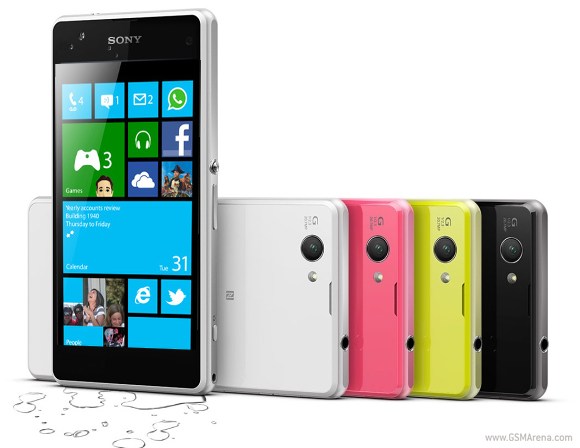
Sony WP smartphone to come in 2014 under the Vaio brand

It appears that the negotiations between Sony and Microsoft have ended up successfully and the Japanese company will indeed be joining the list of Windows Phone hardware manufacturers. Microsoft’s Windows Phone director Greg Sullivan has confirmed that Sony will be releasing its own WP smartphone in 2014.
Better yet, the device is said to hit the market by the middle of the year, so we won’t even have to wait that long to see it. The new Sony smartphone will be carrying the Vaio brand, which should help you tell that it’s running a different OS from the Xperia handsets. With the limited customization options provided by the Microsoft partners, the Vaio smartphone will be relying on the Sony proprietary services such as Music Unlimited and Video Unlimited to help it stand out in the crowd.

The news that Sony and Microsoft have reached an agreements comes as little surprise, given that the deal will obviously be beneficial to both company. Sony has already expressed its desire to add a second platform to its smartphone lineup and Windows Phone is the most obvious choice. Microsoft, on the other hand, is looking to expand the reach of its mobile OS and a major manufacturer such as Sony will definitely help. Not to mention that the two companies have quite the long history of partnership in both mobile (remember Windows Mobile?) and desktop platforms.
Update: Cnetnews has since retracted the story, so we guess the negotiations are still going. Hopefully it's just a delay rather than a signal that the two sides can't reach an agreement
Read More »

Samsung Galaxy S5 tipped for March release in London

Yet another tip regarding the potential launch date of the Samsung Galaxy S5 made the rounds on Twitter. According to an Italian journalist citing “reliable source”, the next Samsung Galaxy flagship will launch in mid-March at an event in London.

At a quick glance, the alleged timeframe makes sense, as the Samsung Galaxy S4 got unveiled in March 2013 in New York. Previously rumored launch dates for the Samsung Galaxy S5 included this month, as well as during MWC 2014.
The Samsung Galaxy S5 is rumored to take the design language of the range in a new direction. The handset is expected to feature a metal body and 2K display.
Source:GsmArena
Read More »

Google, Apple and Microsoft set to battle for control of the car

As the car becomes a connected Internet device, the titans of the tech sector are battling for control of the wheel.
The war is shaping up a lot like the computer sector, with GoogleApple and Microsoft and others fighting to be in control of the vehicle's "operating system" to deliver apps, navigation and other services.
Some of those battles were played out this week at the Consumer Electronics Show CES in Las Vegas, which included a record nine auto manufacturers and scores of equipment makers, including software and related tech companies.
"People want consumer apps in their cars, they want to connect to their smartphones, they want to connect to the cloud," says Grant Courville, director of product management at QNX, which makes the on-board systems used on tens of millions of cars.
But the battlefield is wide open because "there's no clear dominant app ecosystem in automotive," Courville told AFP from the CES floor.
At CES, Canadian-based QNX unveiled a partnership with Qualcomm to support the chipmaker's new automotive platform, which connects to smartphones and offers apps for maps, speech recognition, geolocation, and vehicle analytics.
At the same time, Google unveiled a partnership with General Motors, Audi, Honda and Hyundai in a new partnership to bring the Android mobile system to vehicles in a new Open Automotive Alliance

The moves come with Microsoft in a longstanding partnership with Ford, and Apple widely expected to expand its system for connecting the iPhone with automotive electronics systems.
"Carmakers are conflicted," said Tim Tang, an analyst with IDC attending the Las Vegas expo

"They are trying to decide whether to build their own systems or partner with another company. If they partner, they mitigate a lot of the risk, but they give a lot away, looking at future services, like apps, pay-as you go insurance. No one is certain where it is going but carmakers don't want to be left out. The car is becoming a mobile accessory."
Tang said a key question for automakers is whether the cars should have a dedicated connection or use the smartphone.
"If it is a smartphone model, it's easy to get traction quickly, you don't need to design the system five years in advance. But if it is built into the car you have some advantages. If the car is stolen, for example, you can shut it off."
The General Motors division Chevrolet said this week it would deploy fourth generation (4G) Internet connections on several models to help motorists who want to stay connected with the growing number of apps for automobiles.
Read More »

Beats Music announces plans for launch

The long-awaited launch of the music streaming service backed by Dr Dre, Jimmy Iovine, Trent Reznor and Ian Rogers has almost arrived.Beats Music will go live in the United States on 21 January, 2014, complete with a free trial period that'll allow people to sample the service before opening their wallet. After the trial period it'll cost $10 per month.Access will be through a web app on desktop, and iOS, Android and Windows Phone apps on mobile. The catalogue has more than 20 million songs, but the big push for the service is in curation - and human curation in particular.Services like Pandora and Spotify depend on algorithms based on "other people who listened to that also listened to this" to recommend content to their users, but Beats will rely instead on a team of music experts that include radio programmers, A&R directors, music writers, and bloggers. There'll be playlists included from the likes of Pitchfork, Rolling Stone, DJ Magazine and various others.This will manifest itself in four ways for the user. A "just for you" selection of albums and playlists delivered "at least four times a day" based on their musical preferences, activity, time of day and "additional cultural and contextual clues", a "right now" continuous playlist based on a user's answers to four questions about their location, activity, surroundings and musical preferences, a "highlights" list of staff-recommended playlists and albums, and a more traditional browsing function that lets you find playlists and songs by genre, activity or curator. The ability to download tracks to listen to offline will also be included.That sounds a bit overwhelming on paper, so it'll be interesting to see how it manifests itself at launch. Hopefully some of that complexity will be hidden from the user. Jimmy Iovine said: "Popular music is created in bite size pieces, one song at a time -- but most people need more than four minutes to be truly satisfied. It takes a highly curated, uninterrupted sequence of songs to achieve a fulfilling music experience, where the only song as important as the song you are listening to is the song that comes next."One interesting thing is that the royalty rates are flat -- meaning that every artist from the biggest to the smallest will earn the same amount for their catalogue. It's likely hoped that this will head of criticism from a vocal minority of musicians who argue that streaming services don't pay new bands enough."Beats Music is based on the belief that all music has value and this concept was instilled in every step of its development. We want it to be just as meaningful for artists as it is for fans," said Trent Reznor, who serves as Beats Music Chief Creative Officer. "We're committed to providing revenue to artists, while helping to strengthen the connection with their fans."Beats Music will be arriving in the United States on 21 January 2014. A wider launch has not yet been announced.
Read More »

Nikon Coolpix L830

Some of Nikon's more affordable cameras can be a bit hit and miss, but after playing with the long-zoom Nikon Coolpix L830 at the Consumer Electronics Show in Las Vegas we were rather impressed.
Key to the L830's spec is its 34x optical zoom lens, which translates into a super-wide 22.5mm all the way through to a 765mm equivalent at the top-end of the zoom. That's not only wider-angle than you'll find in almost any compact camera for those wide vista shots, the maximum zoom will also make subjects far away from the lens appear close-up in the frame. It's the all-in-one for an affordable price.
We used the camera on the Nikon stand at the show and found its speedy autofocus to be the main highlight. Even in so-so lighting conditions subjects were flying into focus on the rear tilt-angle LCD screen and the optical image stabilisation did a good job of keeping the preview steady.
There's no viewfinder in this more budget model, as is to be expected at this price point, leaving other higher-price models such as the Coolpix P530 to cater for that market.

To zoom there's a toggle control to the side of the lens in addition to around the shutter button, leaving the choice up to you. Both work well, as the lens is less significant than in some other superzoom models the size nestles comfortably to the hand.
Image quality is handled by a 16-megapixel CMOS sensor, avoiding the trend of packing too many pixels onto that small surface area like so many manufacturers are guilty of these days. It's also back-side illuminated for optimum quality and able to capture 1080p video at 30fps. We can't critically assess either of these at this point in time given our time with the camera, but for point-and-shoot users anticipate the results will be a good match.
There's not full manual controls as per some higher-spec superzoom models, but that's what keeps this camera simple and to the point. One-touch video capture, self-timer and such controls are quick to access via a dedicated button or as outlined on the four-way d-pad, but otherwise things are kept to a minimum. We like that: the L830 is a well-balanced point-and-shoot superzoom that surpassed our expectations on the performance front
Read More »

ZTE Grand S II is bigger, bolder and more powerful than original

Big phones are all the rage at the moment. ZTE's sequel to the Grand S, the aptly named Grand S II, pushes into phablet territory thanks to its large 5.5-inch screen. It's not only bigger than the original 5-inch model in the series, it's more powerful too. Does it add up to a considerable step forward? We got our hands on one at the Consumer Electronics Show 2014 to see what we made of it.
Chinese manufacturers are really pushing forward in the Android smartphone world. In the hand the Grand S II certainly feels large, but given that we've been using the 5.9-inch Oppo N1 as our go-to phone since the beginning of the year it certainly didn't feel over-sized or too heavy.
Each manufacturer these days also seems by default to heavily re-skin stock Android, and just like its predecessor the Grand S II is no stranger to this. Arrangement of the custom skin over Android 4.3 at first felt a little odd, but given a little use everything felt familiar enough.
The usual trio of Android buttons perform as normal for home, back and menu options - but these are also available via a second floating widget source. It's a bit like the Facebook Messenger floating heads app, meaning this widget can be placed around the screen and dragged outwards to open up the virtual quick access controls, three of which mirror the standard Android controls. A potentially good way of making single-handed use easier on that larger screen.
In addition the re-skinned interface adds in split-screen multi-tasking where more than one app can remain open on screen, while voice activation - a feature we weren't able to test out - can be used to unlock the phone.
We found the soap bar shape and smooth back of the phone sits comfortably in the hand and that big screen looked really good. Although larger than its predecessor it doesn't show a bump in resolution. But given it's a Full HD 1920 x 1080 resolution that's no issue, as this 401ppi screen packs in plenty of detail.
Where things get even more exciting is with regard to the specs. Under the hood there's a Snapdragon S800 processor delivering 2.3Ghz of quad-core power alongside 2GB of RAM. We didn't spend a huge amount of time with the phone, but that should be every bit as strong as the Samsung Galaxy Note 3.
Read More »

Samsung Galaxy Note 3 review

Samsung's Galaxy Note has always been one of the company's more interesting products. It's the one that leads rather than follows the lead of another phone manufacturer. In many ways, it's the handset that proves Samsung can have great ideas that show more creativity than almost any other company on the phone scene.
We loved the Note 2, because it surprised us. We were among the critics from the off who thought it was too damn big. But it changed our minds: after using it for a week we were converted and it went on to become the phone we used as our own handset, day in day out So really, the Note 3 doesn't have to do too much to win us over, but it needs to move things on a bit too. We certainly expect big things from this big handset, and if it doesn't deliver, then we'll be its biggest critic. But enough preamble, does the Galaxy Note 3 push the series forward in the right direction?

Still big, still beautiful

The Note 3's additional 0.2-inches of screen size - toting it up to 5.7-inches - has been delivered without any major increase in device size. In fact, the Note 3 is just 0.1mm longer, but smaller in every other dimension than its predecessor. It's thinner and less wide than its predecessor. Mostly, this doesn't really show when you're using it, but it shows progress is being made, and the screen is larger without making the phone bigger.
But one area where the new device is notably better is in its weight. Or the fact there's less of it. The Note 2 weighed in at 183g, while the Note 3 is 168g. It no doubt sounds silly, as it's a mere 8 per cent lighter, but this makes a massive difference to how the phone feels. Although it's pretty much the same size as the Note 2, the reduced weight means that it feels more modern, and less of a burden to use.
There are other things that seem to make a big difference too. The sides aren't so rounded anymore, so it just feels nicer in your hand. The silver colour makes it look great too, and the etched-in lines make us think of an Art Deco building. In a good way. This is perfect for our taste, but you may not feel the same way.

Faux off

The back of the phone features a sort of faux leather effect. It's a bit silly as it's still just plastic. There's a fake stitching effect too, which is bizarre in the extreme, and it would be the last thing we'd choose to have on a phone, but in day-to-day use it didn't bother us all that much. As with all Samsung phones, the back is removable anyway, so you can replace it with a better alternative. The firm makes several different covers itself, including a "leather" fold over case with a clear window on the front - and we really rather like this.
Under the back cover, you also get some interesting changes. The battery has gone from a 3100mAh unit in the Note 2 to a 3200mAh battery in this phone. There's also Samsung's new all-in-one micro-SIM and microSD card slot. This combines both cards into a double stacked slot. A good space saver.
Elsewhere, things in the design department haven't changed all that much. The phone's controls are in much the same place as the previous device - power button on the right, volume on the left and headphone jack on top.

Out with the old

You get an IR blaster now too, so you can use the Note as a universal remote to change your TV channels and such - setting it up is incredibly easy too. We got it working with our Pioneer TV faster than we have with any other universal remote previously. The app, called WatchON, allows you to search what's on TV and then use that in combination with your TV and satellite receiver, cable box or plain Freeview to change the channel.
However, while the Note 2 had an FM radio, the Note 3 does not. This is sad, but we'll just have to stream our radio over the internet now, instead.
One of the other things that caused a fuss when details of the Note 3 arrived was that the phone would connect via a USB 3 socket at its base, rather than a standard USB 2 socket. The fuss came from the fact that the USB 3 socket is quite a bit bigger than USB 2. But that extra size brings with it a load of extra speed and much better charging options.
The good news is, your old USB chargers do still work with the Note 3, as USB 3 is compatible with USB 2. This means you won't find yourself somewhere, having forgotten to bring your own charger, and then be entirely incapable of charging your phone. We've tested this out and it works just fine.

In with the new

The Note 3 was always going to have a 1080p screen, because smaller phones have moved to this resolution, and there's really no good reason not to. We have to say though, the reality of this screen is better than we expected. On apps that support the new resolution, it's utterly breathtaking to look at. Fonts have a look that printed books would struggle with. It really is a thing of beauty.
Read More »

Xbox One live gameplay broadcast feature could still be months away

Microsoft couldn't deliver one of the Xbox One's key features at launch: the ability to stream your gameplay, live, for anyone on the web to watch. Here's more bad news: the company behind that feature, Twitch.tv, has no idea when it will launch either. According to a tweet from the company, Microsoft hasn't yet provided any date, and it could be "a few more months" before it arrives. Xbox One Direct Broadcasting: There is no ETA at this time from Microsoft. Expect a few more months. If we know sooner, we'll updateWhat's the hold up? We can't say, but one possibility is that Microsoft hasn't yet figured out how to deal with streams of an unsavory nature. Sony's PlayStation 4, which did ship with Twitch.tv, found itself facing a bit of a controversy when users realized they could filmthemselves doing all sorts of things — including having sex — in the augmented reality demo The Playroom. Sony decided to cut off access to Twitch.tv for that one game as a solution, perhaps something that's not as easy or even technically impossible with the current Xbox One software.
Also, it's not like Sony delivered on all of its promises for the PlayStation 4 at launch. The console is still lacking its instant-on mode to instantly resume games from standby, and it won't stream games from PlayStation Now until summer at the earliest
Read More »